
Expertise
Cloud & Platform Operations
Create a repeatable path from development to production with clear access and operating ownership.
Cloud & Platform Operations
Create a repeatable path from development to production with clear access and operating ownership.
Built around your operating context
Platform owners, engineering leads and service operators
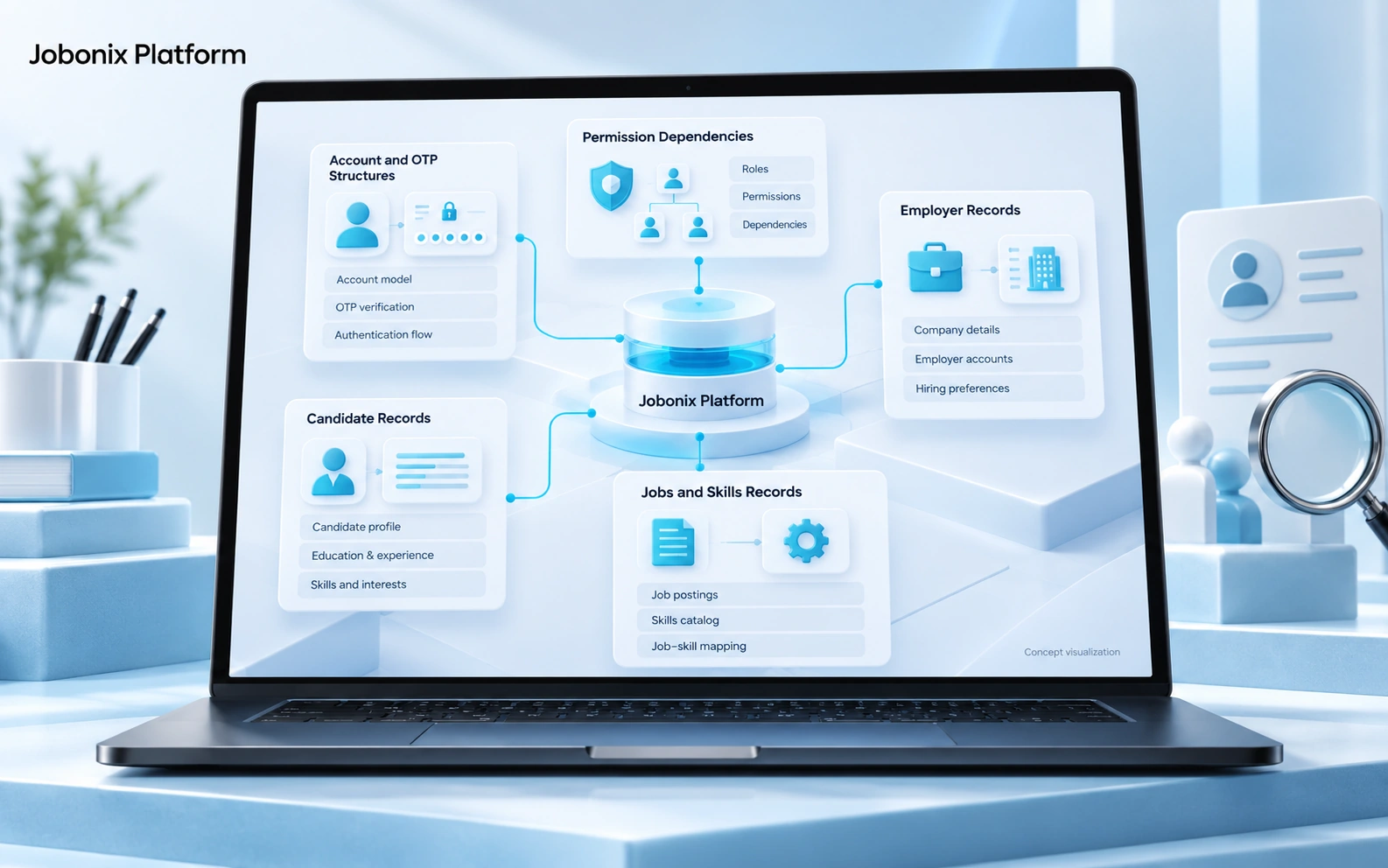
Backend platform · AI concept visualization · project scope
Jobonix Platform
Recruitment data models · Account and OTP structures · Employer and candidate records
Platform delivery and operations
Build for the day after the release.
Repeatable delivery
Separate build-time and runtime configuration.
Explore the approach
Separate build-time and runtime configuration. Agree environment promotion, validation and rollback so releases do not depend on undocumented manual steps.
Operational visibility
Connect application logs, service health and actionable alerts.
Explore the approach
Connect application logs, service health and actionable alerts. Give each failure mode a response owner and enough context to investigate without exposing sensitive data.
Recovery and change
Review persistent storage, backups and restore procedures.
Explore the approach
Review persistent storage, backups and restore procedures. Exercise a rollback and identify the constraints that affect recovery time and data loss.
Choose what your project needs
A clear scope.
A useful result.
Our approach
Review the current infrastructure, deployment process and recovery requirements. Automate repeatable steps and agree monitoring and incident responsibilities.
Cloud and platform stack
Select technologies according to the product constraints, integration requirements and the team that will maintain the system.
AWS
Assess workload, access, deployment and recovery needs before selecting services. Document the architecture and the team responsible for ongoing operation.
Microsoft Azure
Connect platform design to identity, data and existing enterprise integration requirements. Agree operating boundaries and deployment ownership.
Google Cloud Platform
Plan services around the application and data workload rather than a fixed product list. Define monitoring, access and recovery expectations with the platform owner.
Docker
Package applications with reproducible runtime and configuration boundaries. Validate image provenance, resource needs and how updates will be released.
Kubernetes
Use orchestration where the operating requirements justify it. Review cluster ownership, workload policies, observability and recovery before increasing complexity.
From first release to ongoing improvement
Agree acceptance criteria, test the critical user journeys and document the release and support path.
In project context
The work behind the possibilities.
AI concept visualization · project scope
Recruitment · Backend platform
Jobonix Platform
Recruitment data models · Account and OTP structures · Employer and candidate records
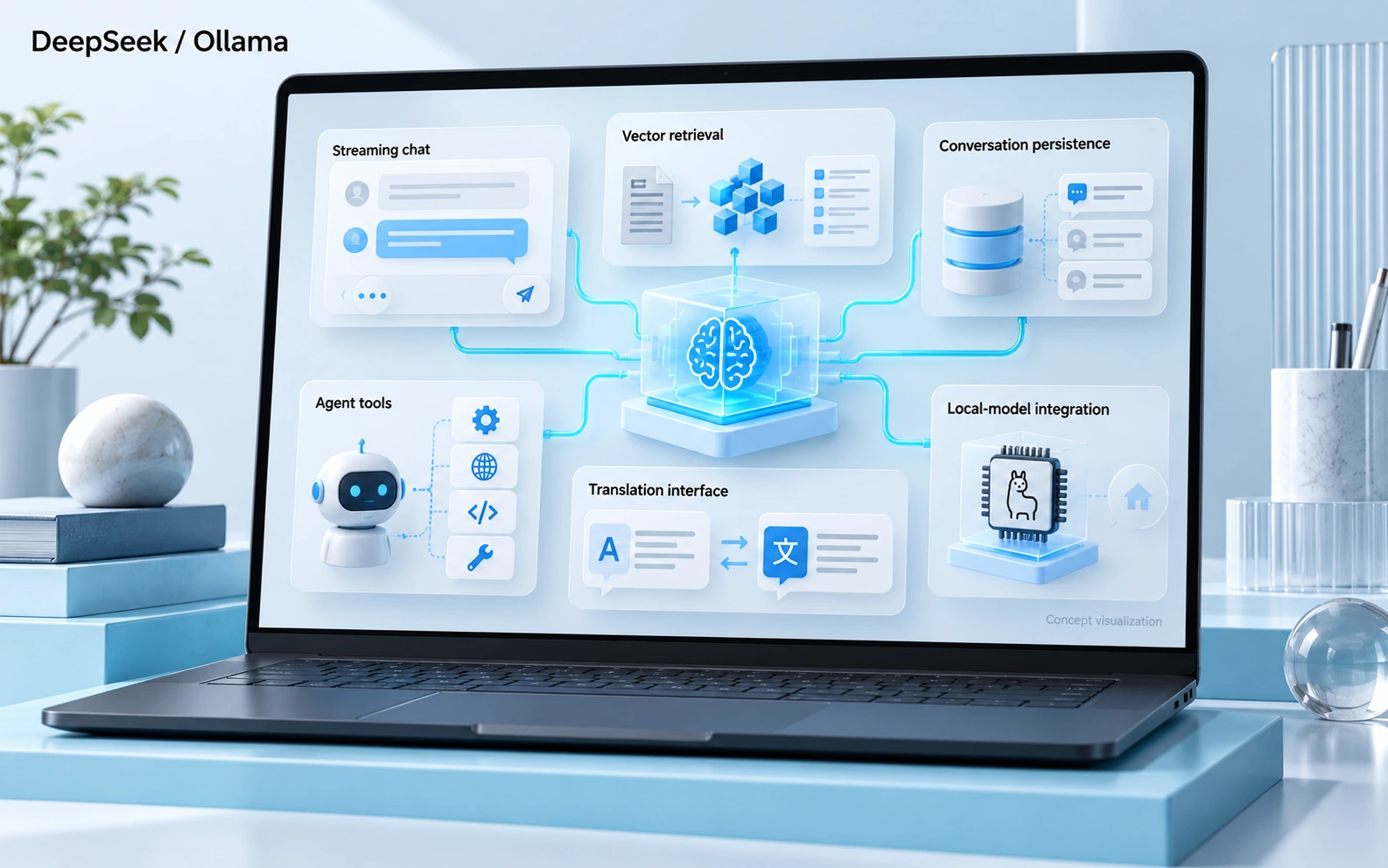
AI concept visualization · project scope
Knowledge management · Application
DeepSeek / Ollama
Streaming chat · Vector retrieval · Conversation persistence
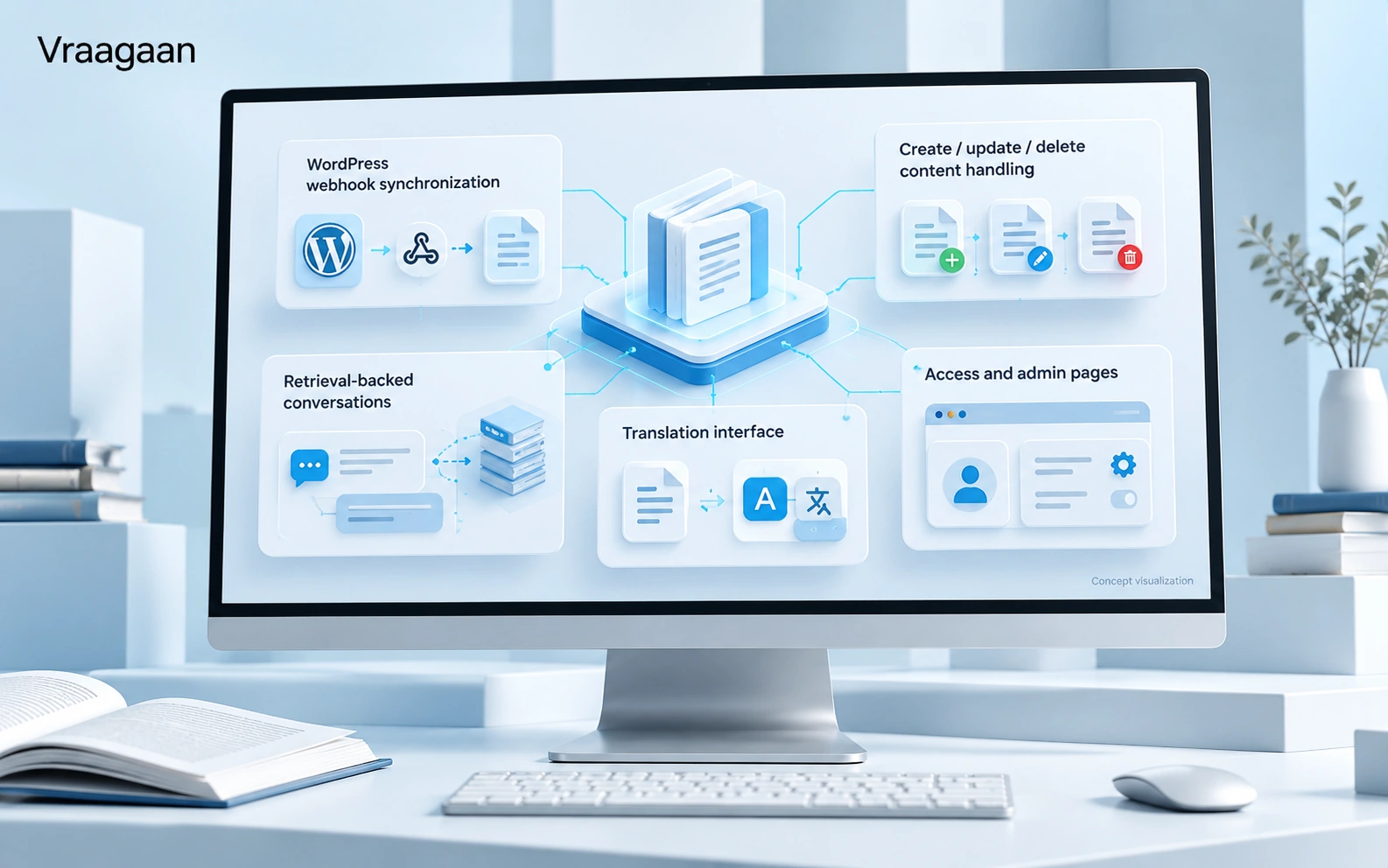
AI concept visualization · project scope
Publishing and knowledge · Application
Vraagaan
WordPress webhook synchronization · Create/update/delete content handling · Retrieval-backed conversations
Each project has its own scope and stage. Explore the profile for implementation details.
The path from idea to operation
Start focused.
Build with clarity.
- 01
Assess
Establish the source records and the intended result.
- 02
Automate
Connect the approved sources and apply the task-specific checks.
- 03
Observe
Review representative outputs and exceptions with the accountable owner.
- 04
Improve
Record the outcome, hand work to the responsible team and retain the information needed to investigate or improve the next run.
Deliverables & evaluation
What takes shape
Repeatable release and rollback paths
Separate build-time and runtime configuration. Agree environment promotion, validation and rollback so releases do not depend on undocumented manual steps.
Actionable monitoring and service runbooks
Connect application logs, service health and actionable alerts. Give each failure mode a response owner and enough context to investigate without exposing sensitive data.
Environment and recovery handover materials
Review persistent storage, backups and restore procedures. Exercise a rollback and identify the constraints that affect recovery time and data loss.
Know what good looks like
- Release repeatability and rollback verification
- Actionable alert coverage for critical services
- Restore checks and clarity of incident ownership
Availability targets, hosting costs and recovery objectives depend on the agreed architecture. Portfolio source examples are not evidence of a particular uptime or infrastructure certification.
Bring the context. We’ll shape the next step.
From your world.
Into a working plan.
Source material
- Service and environment inventory
- Deployment and configuration requirements
- Reliability and recovery objectives
- Support ownership and alerting needs
Systems to connect
- Agreed hosting and deployment platforms
- Logs, metrics and alerting services
- Persistent storage and backup interfaces
Useful outputs
- Repeatable release and rollback paths
- Actionable monitoring and service runbooks
- Environment and recovery handover materials
Readiness checklist
Representative source material
Prepare service and environment inventory and deployment and configuration requirements. Start with approved or synthetic examples and identify gaps before introducing live records.
The right people in the room
Involve platform owners, engineering leads and service operators. Identify who can confirm the workflow, review an exception and accept a release.
An agreed evaluation baseline
Define how you will assess release repeatability and rollback verification. Record the current process and include difficult cases in the review set.
Good questions.
Clear answers.
What should we bring to a first conversation?
Bring service and environment inventory, deployment and configuration requirements, reliability and recovery objectives, support ownership and alerting needs. Include a person who knows the current process and can explain the difficult cases. An outline or synthetic example is sufficient for the first conversation.
What would the first release include?
Agree one bounded journey during discovery. A possible first output is repeatable release and rollback paths, supported by a clear review owner and acceptance examples. Actionable monitoring and service runbooks and Environment and recovery handover materials can be scoped where the operating case supports them.
Can this work with our existing systems?
We first review the available interfaces and access rules for agreed hosting and deployment platforms, logs, metrics and alerting services, persistent storage and backup interfaces. An initial engagement can use approved exports where a direct integration is unavailable. Live updates require an agreed permission model and recovery path.
How are results and release readiness reviewed?
Agree examples, failure cases and acceptance criteria before the build. Review source traceability, correction effort, access boundaries and the handover into everyday operations. We do not promise a fixed saving or performance figure before that assessment.
The next useful step