Solutions
Industrial AI & Factory Automation
Connect asset health, production signals and visual inspection across factory operations.
Industrial AI & Factory Automation
Connect asset health, production signals and visual inspection across factory operations.
Built around your operating context
Plant operations, maintenance, quality and engineering teams
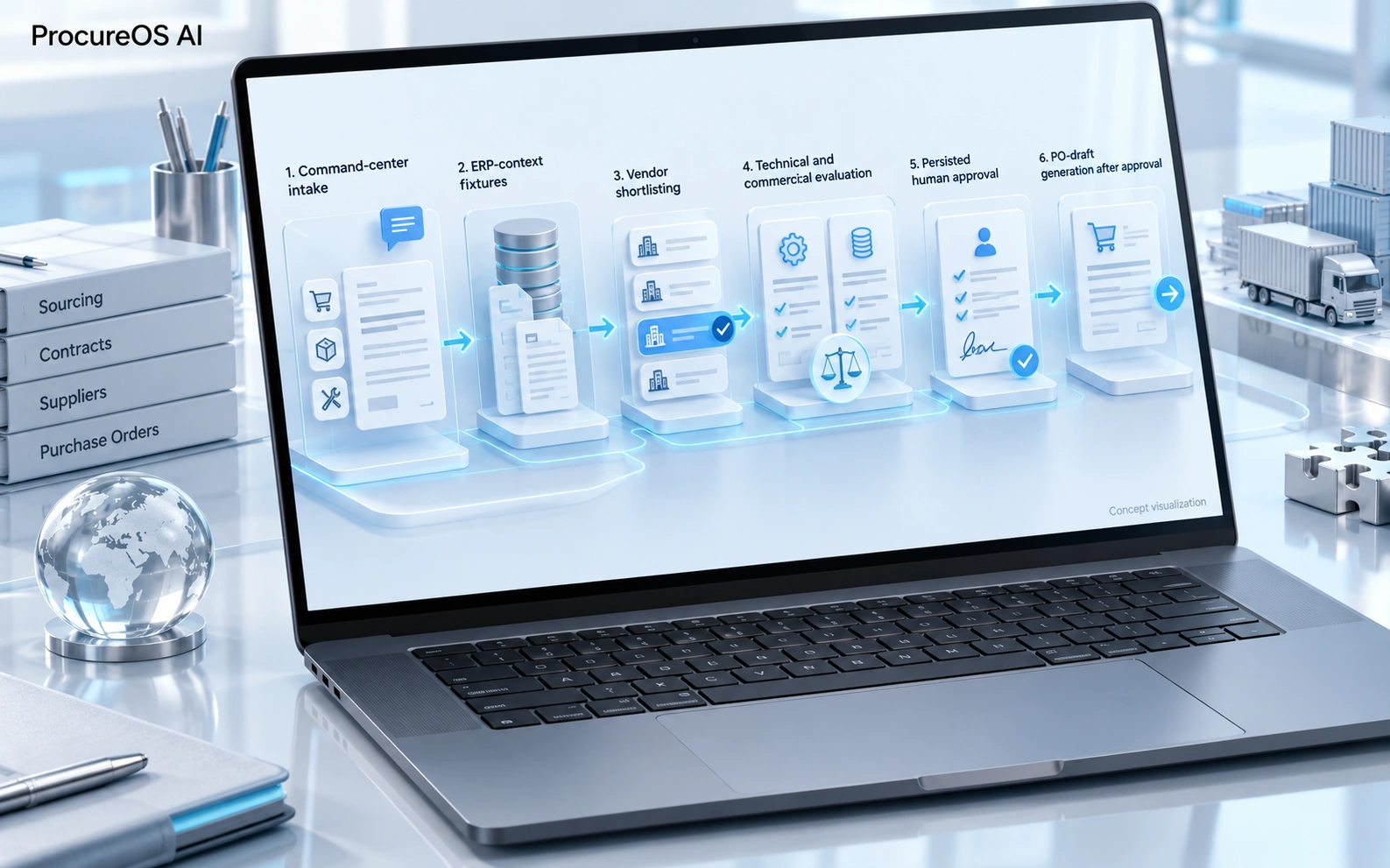
Prototype · AI concept visualization · project scope
ProcureOS AI
Command-center intake · ERP-context fixtures · Vendor shortlisting
Connected industrial operations
Make the next operating decision clearer.
Asset condition
Combine equipment readings, operating hours and maintenance history in a review queue.
Explore the approach
Combine equipment readings, operating hours and maintenance history in a review queue. Engineers assess alerts before maintenance is scheduled.
Quality inspection
Define the visible defect, camera conditions and product variants.
Explore the approach
Define the visible defect, camera conditions and product variants. Compare assisted inspection with a labelled reference set and route uncertain cases to quality teams.
Production visibility
Bring shift events, downtime reasons and energy readings into a common timeline.
Explore the approach
Bring shift events, downtime reasons and energy readings into a common timeline. Keep reporting separate from machine control until interfaces and safety responsibilities are agreed.
Choose what your project needs
A clear scope.
A useful result.
Start with one line or asset
Identify the production bottleneck, maintenance question or inspection task. Review existing sensors, machine interfaces and operational records before introducing new equipment.
Connect the factory context
Bring approved signals into a shared view that operators and engineers can review.
Asset condition and maintenance history
Use asset condition and maintenance history within the agreed scope of industrial ai & factory automation. Define the responsible owner, the relevant source records and the checks that make the output useful.
Visual quality checks with reviewer feedback
Use visual quality checks with reviewer feedback within the agreed scope of industrial ai & factory automation. Define the responsible owner, the relevant source records and the checks that make the output useful.
Production status and energy consumption
Use production status and energy consumption within the agreed scope of industrial ai & factory automation. Define the responsible owner, the relevant source records and the checks that make the output useful.
Yard movement and operational exceptions
Use yard movement and operational exceptions within the agreed scope of industrial ai & factory automation. Define the responsible owner, the relevant source records and the checks that make the output useful.
Validate under real operating conditions
Compare proposed checks with known events and operator observations. Review missed events, false alarms, connectivity limits and the effort needed to resolve exceptions.
Keep operational control with the plant
Agree read-only integrations, access boundaries and escalation ownership during discovery. Existing machine safety controls and authorized operator decisions remain in place.
In project context
The work behind the possibilities.
AI concept visualization · project scope
Procurement · Prototype
ProcureOS AI
Command-center intake · ERP-context fixtures · Vendor shortlisting
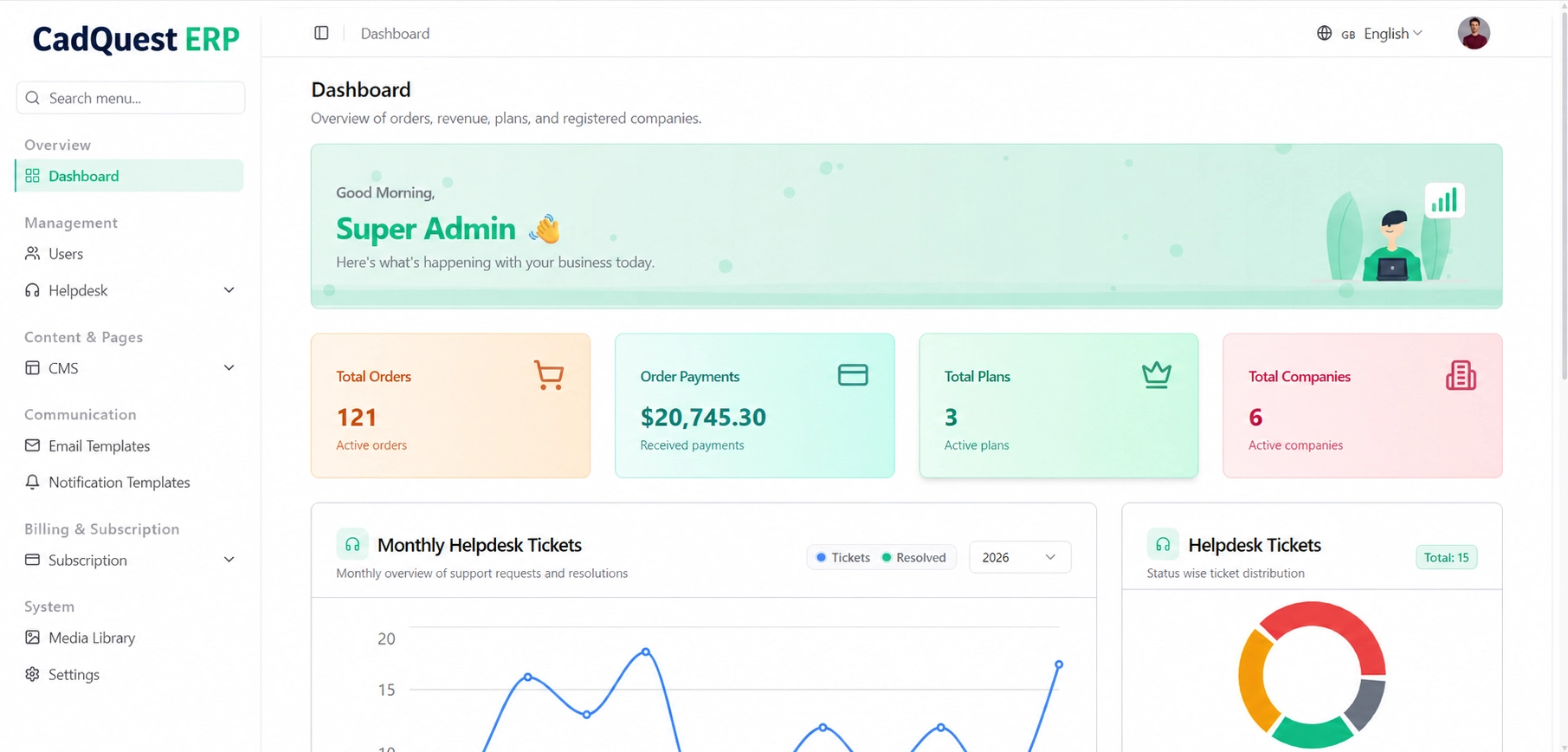
CadQuest ERP · branding-edited preview
Enterprise operations · Application
CadQuest ERP
Accounting and banking modules · Invoices and bills · Employee and attendance records
Each project has its own scope and stage. Explore the profile for implementation details.
The path from idea to operation
Start focused.
Build with clarity.
- 01
Observe
Establish the source records and the intended result.
- 02
Detect
Connect the approved sources and apply the task-specific checks.
- 03
Review
Review representative outputs and exceptions with the accountable owner.
- 04
Respond
Record the outcome, hand work to the responsible team and retain the information needed to investigate or improve the next run.
Deliverables & evaluation
What takes shape
Condition and production review views
Combine equipment readings, operating hours and maintenance history in a review queue. Engineers assess alerts before maintenance is scheduled.
Inspection exception queues
Define the visible defect, camera conditions and product variants. Compare assisted inspection with a labelled reference set and route uncertain cases to quality teams.
Documented signal and operator handoffs
Bring shift events, downtime reasons and energy readings into a common timeline. Keep reporting separate from machine control until interfaces and safety responsibilities are agreed.
Know what good looks like
- Alert usefulness and false-positive rate
- Coverage across shifts, assets and product variants
- Time from an exception to an accountable response
Operational visibility is not a certified safety system. Safety-critical decisions, control changes and equipment isolation stay with authorised personnel.
Bring the context. We’ll shape the next step.
From your world.
Into a working plan.
Source material
- Asset and production identifiers
- Representative condition or inspection data
- Shift and maintenance context
- Operator review and escalation rules
Systems to connect
- Approved plant-data interfaces
- Maintenance and quality systems
- Read-only sensor or operational exports
Useful outputs
- Condition and production review views
- Inspection exception queues
- Documented signal and operator handoffs
Readiness checklist
Representative source material
Prepare asset and production identifiers and representative condition or inspection data. Start with approved or synthetic examples and identify gaps before introducing live records.
The right people in the room
Involve plant operations, maintenance, quality and engineering teams. Identify who can confirm the workflow, review an exception and accept a release.
An agreed evaluation baseline
Define how you will assess alert usefulness and false-positive rate. Record the current process and include difficult cases in the review set.
Good questions.
Clear answers.
What should we bring to a first conversation?
Bring asset and production identifiers, representative condition or inspection data, shift and maintenance context, operator review and escalation rules. Include a person who knows the current process and can explain the difficult cases. An outline or synthetic example is sufficient for the first conversation.
What would the first release include?
Agree one bounded journey during discovery. A possible first output is condition and production review views, supported by a clear review owner and acceptance examples. Inspection exception queues and Documented signal and operator handoffs can be scoped where the operating case supports them.
Can this work with our existing systems?
We first review the available interfaces and access rules for approved plant-data interfaces, maintenance and quality systems, read-only sensor or operational exports. An initial engagement can use approved exports where a direct integration is unavailable. Live updates require an agreed permission model and recovery path.
How are results and release readiness reviewed?
Agree examples, failure cases and acceptance criteria before the build. Review source traceability, correction effort, access boundaries and the handover into everyday operations. We do not promise a fixed saving or performance figure before that assessment.
The next useful step