
Expertise
Web & Platform Engineering
Build business applications, customer portals and connected tools that are clear to use and maintain.
Web & Platform Engineering
Build business applications, customer portals and connected tools that are clear to use and maintain.
Built around your operating context
Product owners, business teams and application engineers

Website · AI presentation artwork · screen reference
Knowear
Product and collection discovery · Search · Cart and checkout interface
Products and platform engineering
Build the whole working experience.
Complete user journeys
Connect onboarding, the core task and follow-up in a coherent experience.
Explore the approach
Connect onboarding, the core task and follow-up in a coherent experience. Include loading, empty, error and recovery states across devices and assistive technology.
Systems and data contracts
Define entities, validation and API boundaries before expanding features.
Explore the approach
Define entities, validation and API boundaries before expanding features. Plan migrations, duplicate handling and backwards compatibility with existing consumers.
Release and operation
Create a repeatable delivery path with environment separation, observability and rollback.
Explore the approach
Create a repeatable delivery path with environment separation, observability and rollback. Hand over runbooks alongside working software.
Choose what your project needs
A clear scope.
A useful result.
Our approach
Define users, workflows and permission boundaries before implementation. Deliver usable increments with documented APIs and a practical release process.
Frontend technologies
Select technologies according to the product constraints, integration requirements and the team that will maintain the system.
ReactJS
Build reusable interfaces around the primary task and state transitions. Include keyboard access, error handling and clear loading feedback in the user journey.
VueJS
Structure business interfaces into maintainable components and explicit data flows. Define integration boundaries, accessibility requirements and the release process.
Next.js
Choose server and client rendering around content, interactivity and operating needs. Keep routing, metadata, data access and release verification part of the design.
AngularJS
Assess the existing AngularJS application and its dependencies before choosing a maintenance or migration path. Plan changes in stages with regression coverage for critical flows.
Progressive Web Application (PWA)
Identify which journeys need installation, offline access or background behaviour. Validate browser capabilities and clear fallbacks for unsupported devices.
Backend technologies
Select technologies according to the product constraints, integration requirements and the team that will maintain the system.
Node.js
Build service interfaces with explicit validation, permissions and error handling. Agree API contracts, operational visibility and a supportable dependency strategy.
Python
Use data and application services where the workload benefits from the Python ecosystem. Define input contracts, job ownership and verification of generated outputs.
.NET
Integrate enterprise services around clear application boundaries and access rules. Include existing-system compatibility and operating ownership in the delivery plan.
From first release to ongoing improvement
Agree acceptance criteria, test the critical user journeys and document the release and support path.
In project context
The work behind the possibilities.
AI presentation artwork · screen reference
E-commerce · Website
Knowear
Product and collection discovery · Search · Cart and checkout interface
AI presentation artwork · screen reference
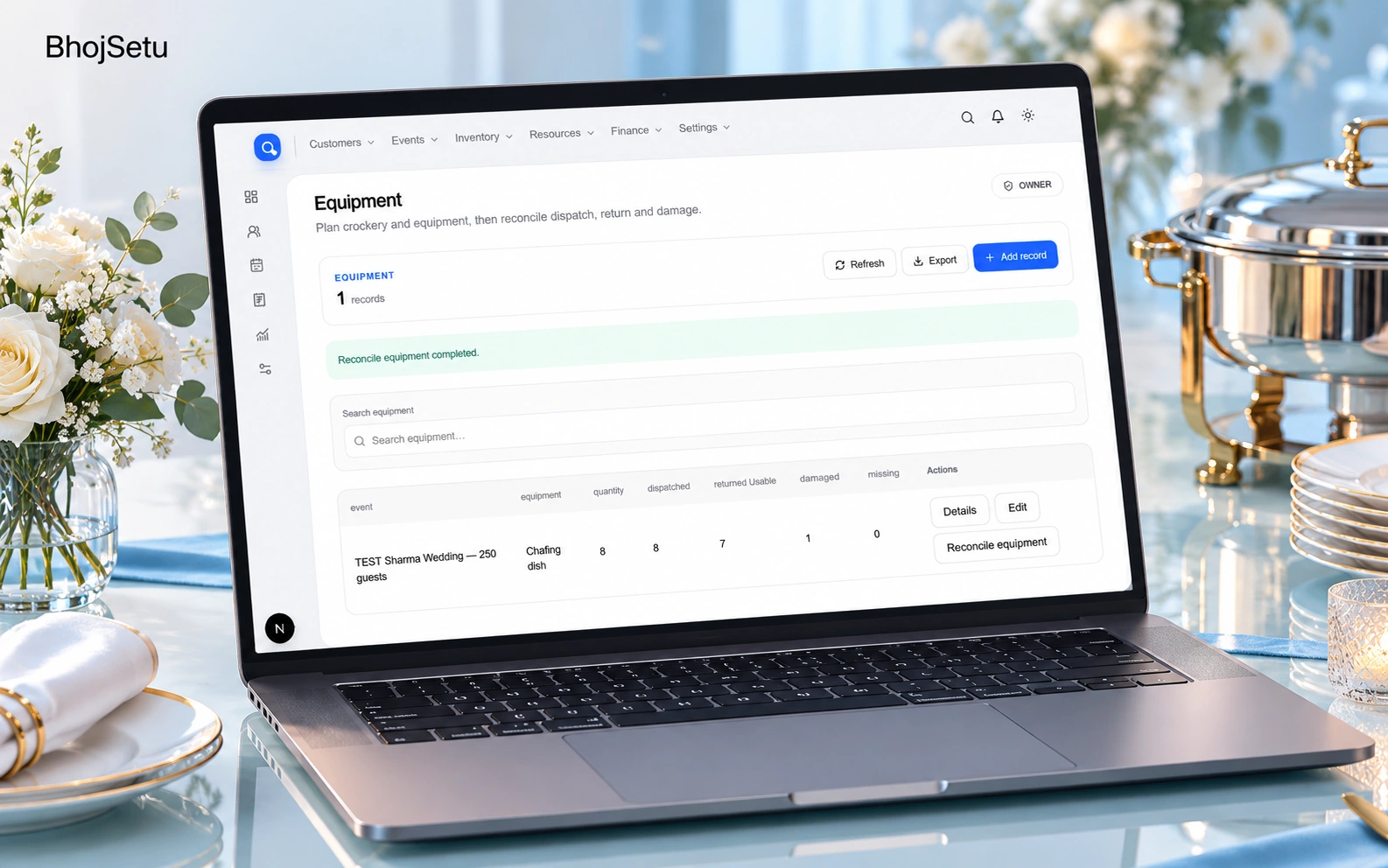
Catering and events · Pilot
BhojSetu
Event and menu planning · Recipe quantity calculations · Procurement and receiving
AI concept visualization · project scope
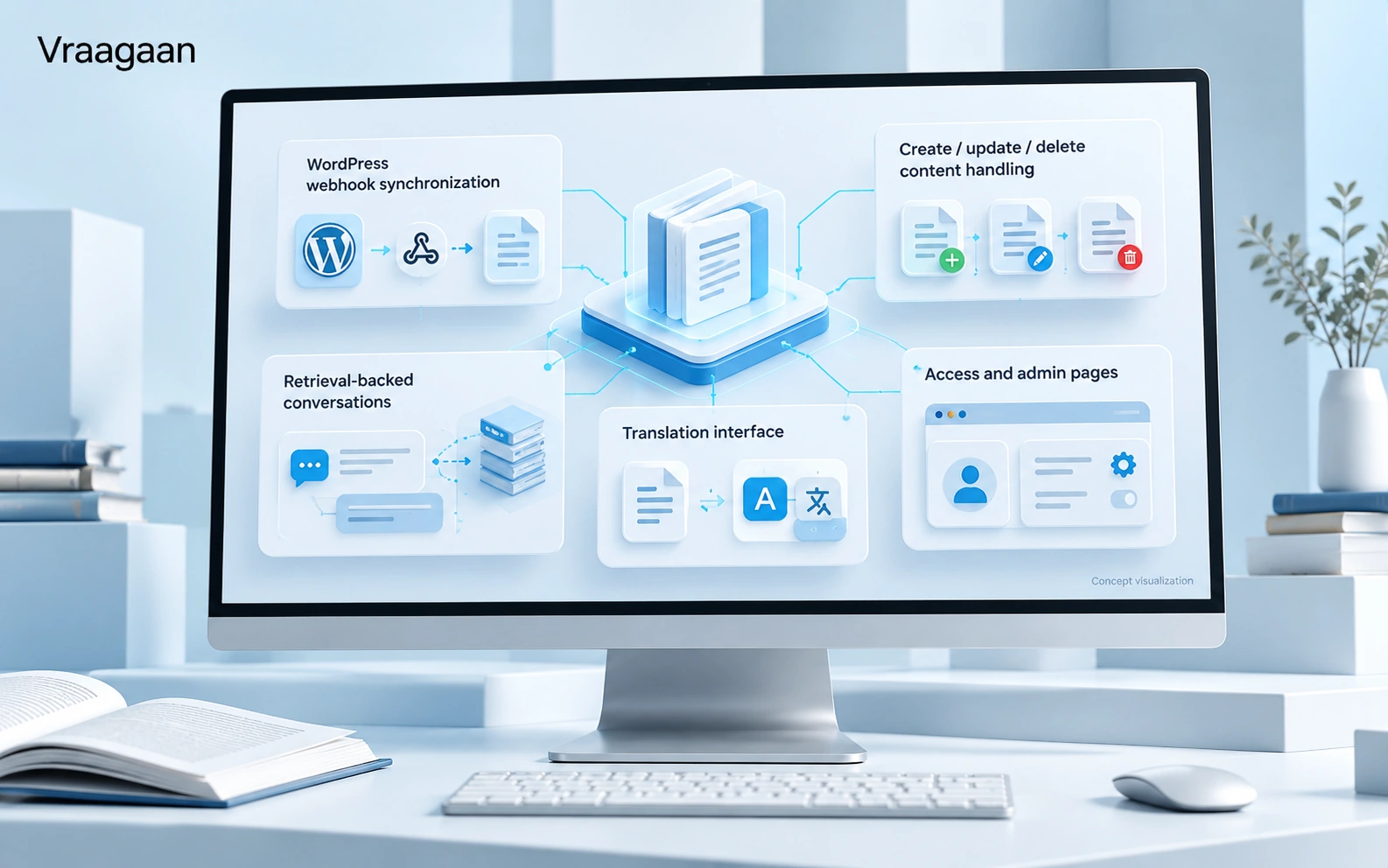
Publishing and knowledge · Application
Vraagaan
WordPress webhook synchronization · Create/update/delete content handling · Retrieval-backed conversations
Each project has its own scope and stage. Explore the profile for implementation details.
The path from idea to operation
Start focused.
Build with clarity.
- 01
Map
Establish the source records and the intended result.
- 02
Design
Connect the approved sources and apply the task-specific checks.
- 03
Integrate
Review representative outputs and exceptions with the accountable owner.
- 04
Launch
Record the outcome, hand work to the responsible team and retain the information needed to investigate or improve the next run.
Deliverables & evaluation
What takes shape
Connected application increments
Connect onboarding, the core task and follow-up in a coherent experience. Include loading, empty, error and recovery states across devices and assistive technology.
Documented data and integration boundaries
Define entities, validation and API boundaries before expanding features. Plan migrations, duplicate handling and backwards compatibility with existing consumers.
Release and operational handover materials
Create a repeatable delivery path with environment separation, observability and rollback. Hand over runbooks alongside working software.
Know what good looks like
- Completion of critical journeys and recovery paths
- Reliability, accessibility and performance budgets
- Release repeatability and operational ownership
A prototype demonstrates an interaction or architecture; it is not automatically production-ready. Security, scale, integration and operational acceptance need their own evidence.
Bring the context. We’ll shape the next step.
From your world.
Into a working plan.
Source material
- Complete user journeys
- Data and integration contracts
- Access and permission rules
- Release and acceptance requirements
Systems to connect
- Business and application APIs
- Identity and persistent data systems
- Approved deployment and monitoring environments
Useful outputs
- Connected application increments
- Documented data and integration boundaries
- Release and operational handover materials
Readiness checklist
Representative source material
Prepare complete user journeys and data and integration contracts. Start with approved or synthetic examples and identify gaps before introducing live records.
The right people in the room
Involve product owners, business teams and application engineers. Identify who can confirm the workflow, review an exception and accept a release.
An agreed evaluation baseline
Define how you will assess completion of critical journeys and recovery paths. Record the current process and include difficult cases in the review set.
Good questions.
Clear answers.
What should we bring to a first conversation?
Bring complete user journeys, data and integration contracts, access and permission rules, release and acceptance requirements. Include a person who knows the current process and can explain the difficult cases. An outline or synthetic example is sufficient for the first conversation.
What would the first release include?
Agree one bounded journey during discovery. A possible first output is connected application increments, supported by a clear review owner and acceptance examples. Documented data and integration boundaries and Release and operational handover materials can be scoped where the operating case supports them.
Can this work with our existing systems?
We first review the available interfaces and access rules for business and application apis, identity and persistent data systems, approved deployment and monitoring environments. An initial engagement can use approved exports where a direct integration is unavailable. Live updates require an agreed permission model and recovery path.
How are results and release readiness reviewed?
Agree examples, failure cases and acceptance criteria before the build. Review source traceability, correction effort, access boundaries and the handover into everyday operations. We do not promise a fixed saving or performance figure before that assessment.
The next useful step