Solutions
Procurement & Supply Chain
Connect buying, stock and supplier workflows with reviewable controls.
Procurement & Supply Chain
Connect buying, stock and supplier workflows with reviewable controls.
Built around your operating context
Procurement, warehouse and finance process owners

Prototype · AI concept visualization · project scope
ProcureOS AI
Command-center intake · ERP-context fixtures · Vendor shortlisting
Buying, receiving and reconciliation
Keep every handoff connected.
Purchase readiness
Capture the request, check required fields and bring stock context into the approval view.
Explore the approach
Capture the request, check required fields and bring stock context into the approval view. Missing supplier or budget information returns to a named owner.
Supplier coordination
Prepare comparisons and follow-up drafts using approved commercial rules.
Explore the approach
Prepare comparisons and follow-up drafts using approved commercial rules. A buyer reviews commitments, substitutions and changes to terms.
Three-way matching
Compare purchase orders, goods receipts and invoice lines.
Explore the approach
Compare purchase orders, goods receipts and invoice lines. Show quantity, price and tax differences with the supporting record before finance decides what happens next.
Choose what your project needs
A clear scope.
A useful result.
Start with the transaction trail
Connect requests, supplier commitments, receipts and invoices around shared identifiers. Define matching tolerances and approval ownership before automating updates.
Scope the first release
Agree the process owner, connected systems and the smallest useful outcome. Review real examples and exceptions before committing to a wider rollout.
Prepare for enterprise delivery
Document responsibilities and review the controls appropriate to the engagement.
Role-based access and integration boundaries
Use role-based access and integration boundaries within the agreed scope of procurement & supply chain. Define the responsible owner, the relevant source records and the checks that make the output useful.
Acceptance criteria and evaluation examples
Use acceptance criteria and evaluation examples within the agreed scope of procurement & supply chain. Define the responsible owner, the relevant source records and the checks that make the output useful.
Release, rollback and support ownership
Use release, rollback and support ownership within the agreed scope of procurement & supply chain. Define the responsible owner, the relevant source records and the checks that make the output useful.
From pilot to operation
Use working demonstrations and agreed checks to decide whether to expand, refine or stop. Confirm monitoring, documentation and ongoing improvement responsibilities before handover.
In project context
The work behind the possibilities.
AI concept visualization · project scope
Procurement · Prototype
ProcureOS AI
Command-center intake · ERP-context fixtures · Vendor shortlisting
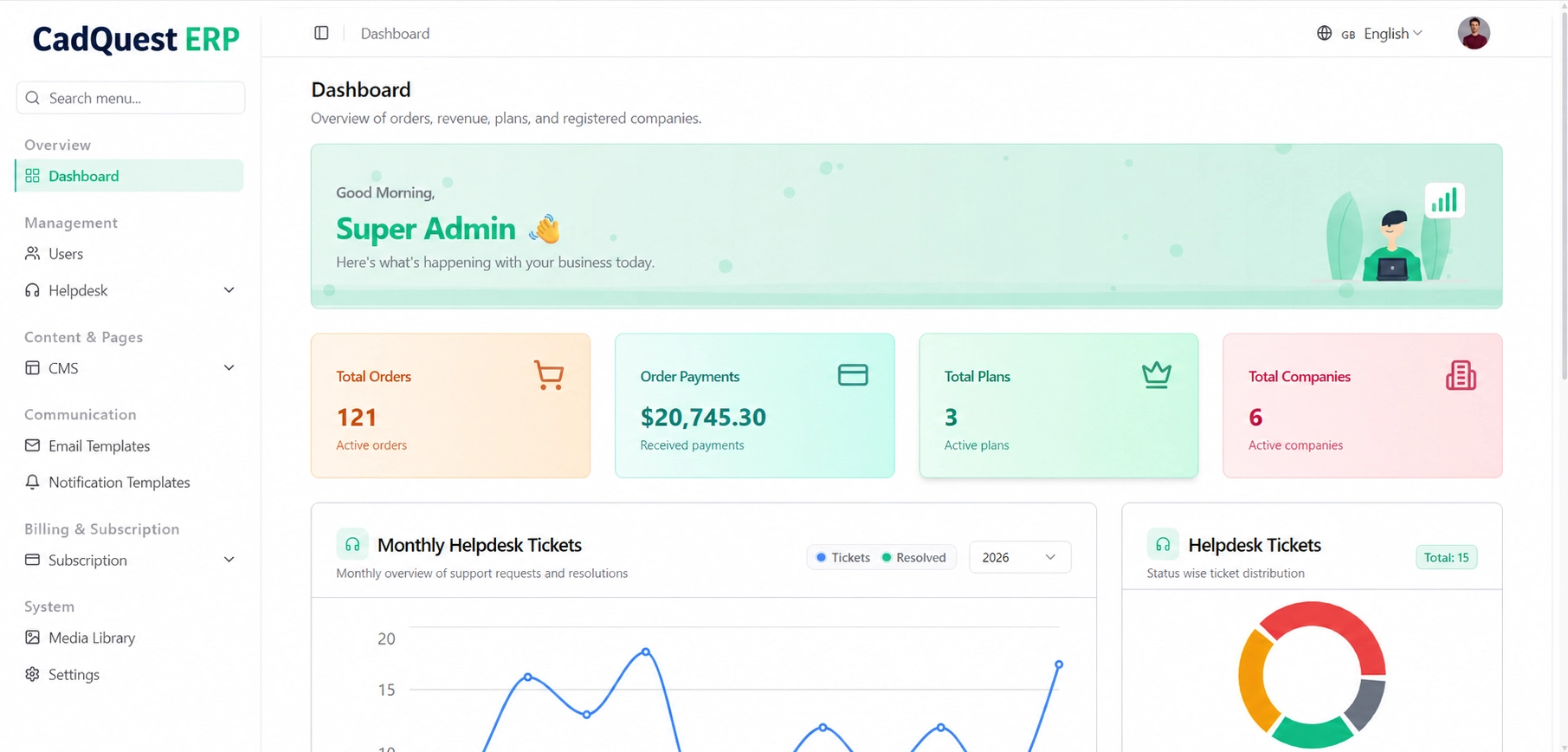
CadQuest ERP · branding-edited preview
Enterprise operations · Application
CadQuest ERP
Accounting and banking modules · Invoices and bills · Employee and attendance records
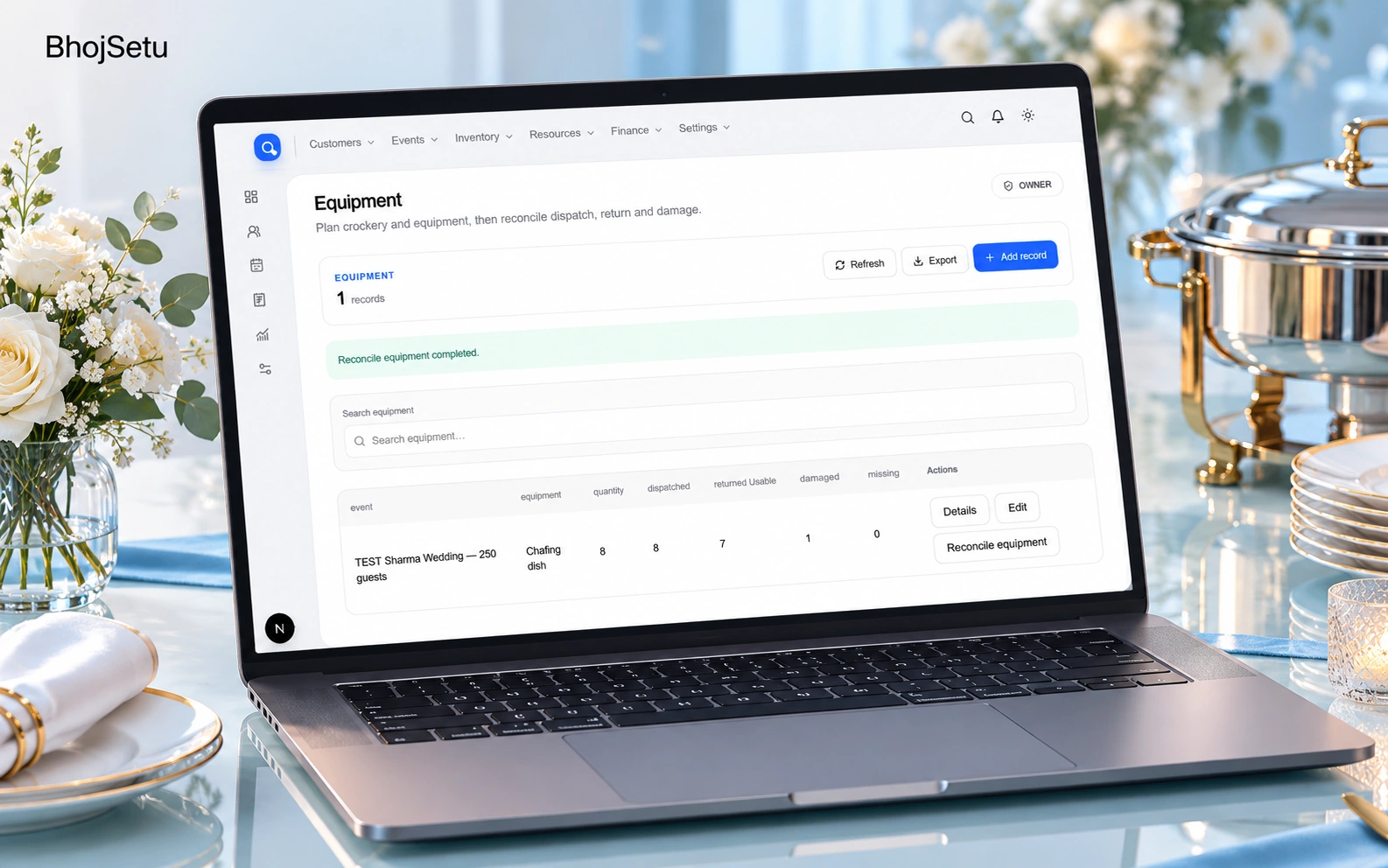
AI presentation artwork · screen reference
Catering and events · Pilot
BhojSetu
Event and menu planning · Recipe quantity calculations · Procurement and receiving
Each project has its own scope and stage. Explore the profile for implementation details.
The path from idea to operation
Start focused.
Build with clarity.
- 01
Request
Establish the source records and the intended result.
- 02
Compare
Connect the approved sources and apply the task-specific checks.
- 03
Approve
Review representative outputs and exceptions with the accountable owner.
- 04
Reconcile
Record the outcome, hand work to the responsible team and retain the information needed to investigate or improve the next run.
Deliverables & evaluation
What takes shape
Connected request and approval workflows
Capture the request, check required fields and bring stock context into the approval view. Missing supplier or budget information returns to a named owner.
Record matching and discrepancy views
Prepare comparisons and follow-up drafts using approved commercial rules. A buyer reviews commitments, substitutions and changes to terms.
Supplier and receiving follow-up queues
Compare purchase orders, goods receipts and invoice lines. Show quantity, price and tax differences with the supporting record before finance decides what happens next.
Know what good looks like
- Match quality on representative invoice lines
- Age and ownership of unresolved exceptions
- Duplicate records, correction effort and review time
Supplier commitments and payment release require explicit authorisation. Missing evidence must remain visible rather than being inferred into a completed transaction.
Bring the context. We’ll shape the next step.
From your world.
Into a working plan.
Source material
- Purchase requests and supplier quotations
- Purchase orders and goods receipts
- Representative invoice lines
- Approval limits and exception rules
Systems to connect
- ERP and purchasing interfaces
- Document storage and invoice feeds
- Approved supplier communication channels
Useful outputs
- Connected request and approval workflows
- Record matching and discrepancy views
- Supplier and receiving follow-up queues
Readiness checklist
Representative source material
Prepare purchase requests and supplier quotations and purchase orders and goods receipts. Start with approved or synthetic examples and identify gaps before introducing live records.
The right people in the room
Involve procurement, warehouse and finance process owners. Identify who can confirm the workflow, review an exception and accept a release.
An agreed evaluation baseline
Define how you will assess match quality on representative invoice lines. Record the current process and include difficult cases in the review set.
Good questions.
Clear answers.
What should we bring to a first conversation?
Bring purchase requests and supplier quotations, purchase orders and goods receipts, representative invoice lines, approval limits and exception rules. Include a person who knows the current process and can explain the difficult cases. An outline or synthetic example is sufficient for the first conversation.
What would the first release include?
Agree one bounded journey during discovery. A possible first output is connected request and approval workflows, supported by a clear review owner and acceptance examples. Record matching and discrepancy views and Supplier and receiving follow-up queues can be scoped where the operating case supports them.
Can this work with our existing systems?
We first review the available interfaces and access rules for erp and purchasing interfaces, document storage and invoice feeds, approved supplier communication channels. An initial engagement can use approved exports where a direct integration is unavailable. Live updates require an agreed permission model and recovery path.
How are results and release readiness reviewed?
Agree examples, failure cases and acceptance criteria before the build. Review source traceability, correction effort, access boundaries and the handover into everyday operations. We do not promise a fixed saving or performance figure before that assessment.
The next useful step