
Industries
Customer Support & Business Process Outsourcing (BPO)
Give service teams usable context, consistent knowledge and clear handoffs across customer channels.
Customer Support & Business Process Outsourcing (BPO)
Give service teams usable context, consistent knowledge and clear handoffs across customer channels.
Built around your operating context
Service managers, contact-centre owners and customer operations teams
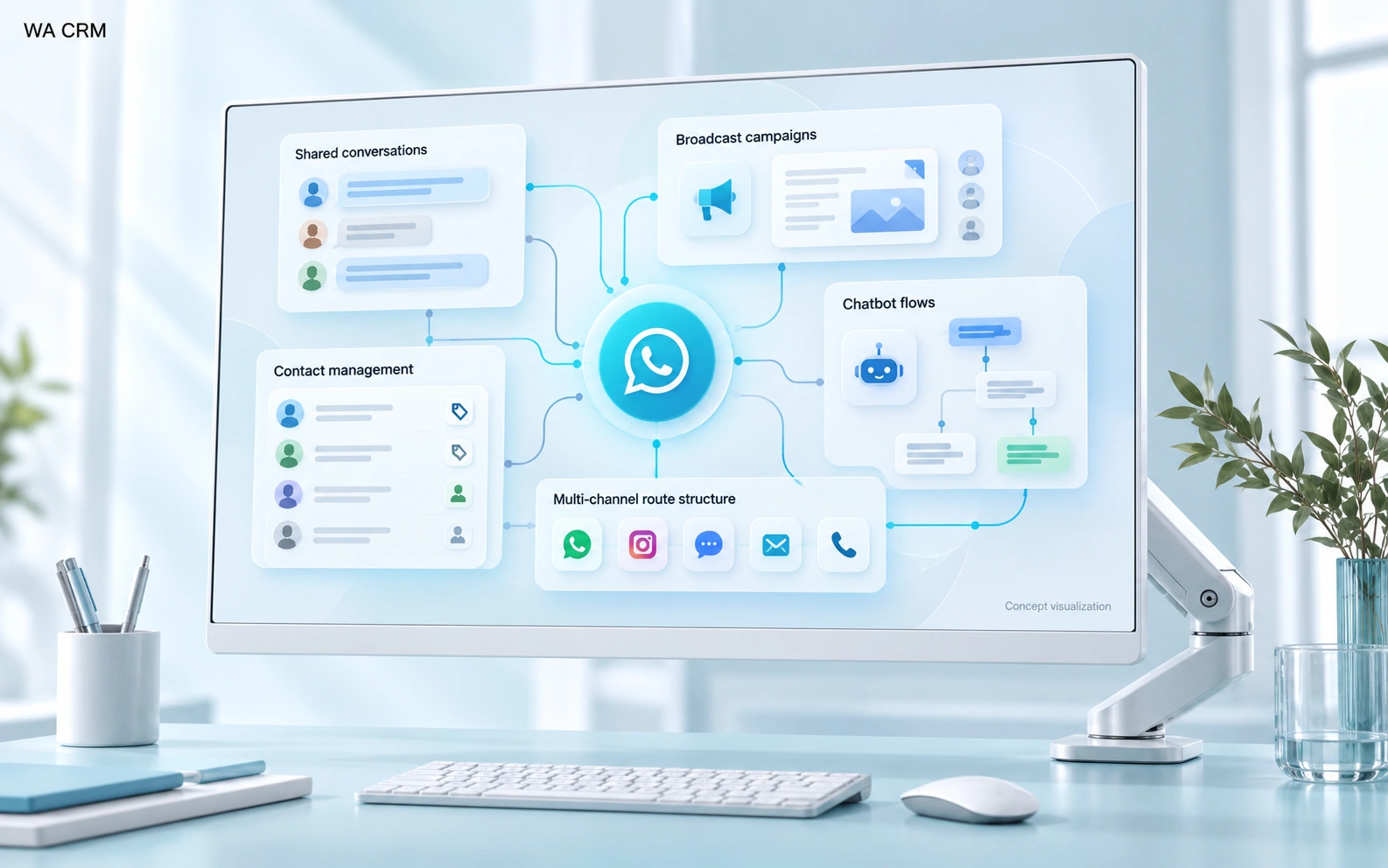
Commercial foundation · AI concept visualization · project scope
WA CRM
Shared conversations · Contact management · Broadcast campaigns
Customer conversations and service
One conversation. A connected response.
Shared service inbox
Organise conversations, contacts and assignments so a handoff preserves history.
Explore the approach
Organise conversations, contacts and assignments so a handoff preserves history. Separate channel delivery status from actual customer resolution.
Agent assistance
Retrieve relevant guidance and prepare a response for review.
Explore the approach
Retrieve relevant guidance and prepare a response for review. Show missing information and offer an escalation path rather than guessing.
Voice and follow-up
Define call purpose, consent, escalation and retry rules.
Explore the approach
Define call purpose, consent, escalation and retry rules. Route the outcome to a responsible person with enough context to continue the work.
Choose what your project needs
A clear scope.
A useful result.
Where we can help
Choose a concrete task with an identifiable owner and a usable source of information.
Query classification and routing
Use query classification and routing within the agreed scope of customer support & business process outsourcing (bpo). Define the responsible owner, the relevant source records and the checks that make the output useful.
Knowledge retrieval and response drafts
Use knowledge retrieval and response drafts within the agreed scope of customer support & business process outsourcing (bpo). Define the responsible owner, the relevant source records and the checks that make the output useful.
Quality review and escalation tracking
Use quality review and escalation tracking within the agreed scope of customer support & business process outsourcing (bpo). Define the responsible owner, the relevant source records and the checks that make the output useful.
Start with the operating context
Use representative support examples, approved knowledge and a clear escalation path. Assess helpfulness and correction effort before expanding.
Keep people in control
Agree permissions, review queues and escalation rules before any system updates customer, financial or operational records.
A focused first step
Map the current process, assess sample data and define a pilot with acceptance criteria and a clear handover.
In project context
The work behind the possibilities.
AI concept visualization · project scope
Customer communications · Commercial foundation
WA CRM
Shared conversations · Contact management · Broadcast campaigns
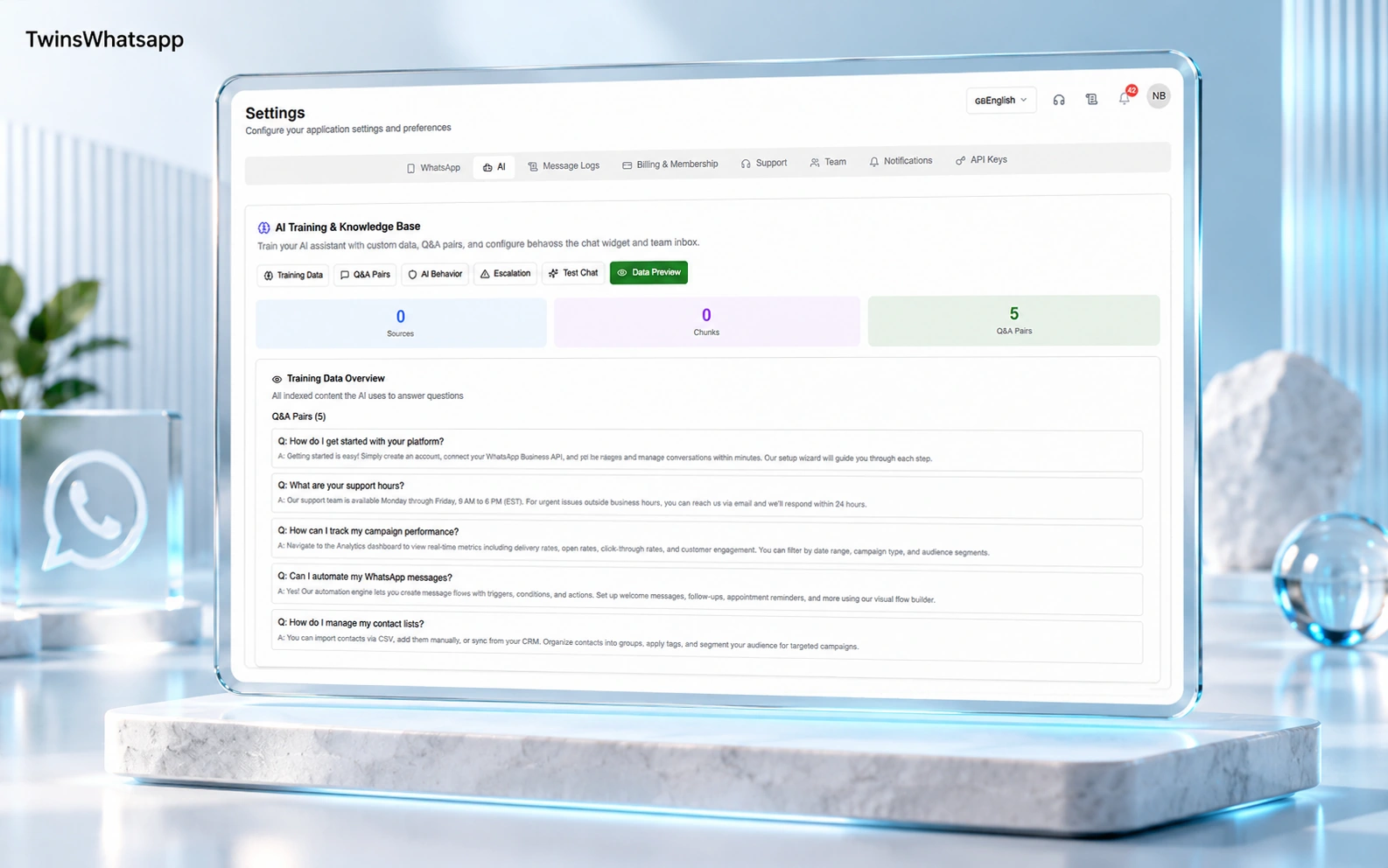
AI presentation artwork · screen reference
Customer communications · Application
TwinsWhatsapp
Shared chat and inbox · Contact and lead management · Campaigns and analytics
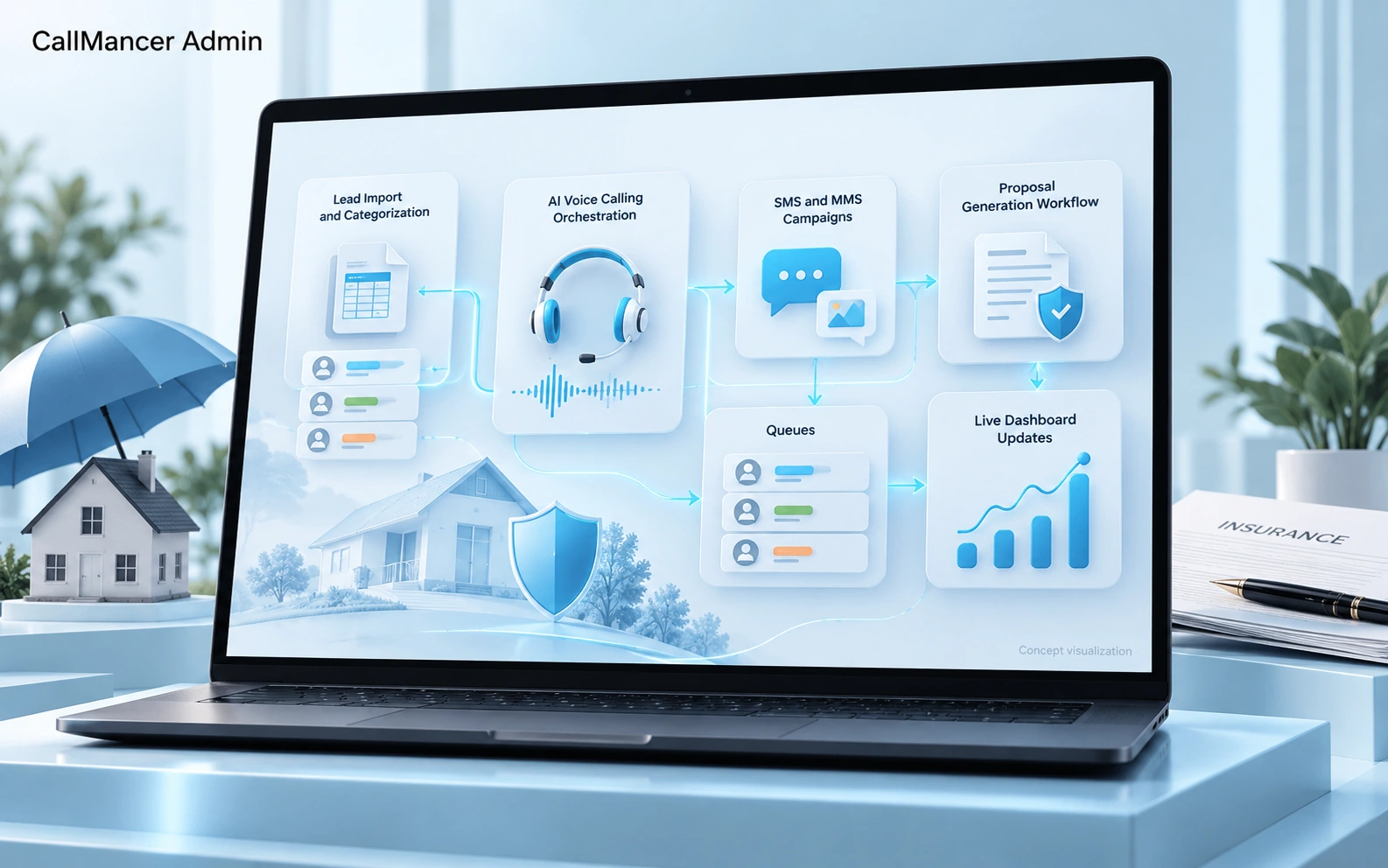
AI concept visualization · project scope
Insurance and sales · Application
CallMancer Admin
Lead import and categorization · AI voice calling orchestration · SMS and MMS campaigns
Each project has its own scope and stage. Explore the profile for implementation details.
The path from idea to operation
Start focused.
Build with clarity.
- 01
Receive
Establish the source records and the intended result.
- 02
Reason
Connect the approved sources and apply the task-specific checks.
- 03
Review
Review representative outputs and exceptions with the accountable owner.
- 04
Act
Record the outcome, hand work to the responsible team and retain the information needed to investigate or improve the next run.
Deliverables & evaluation
What takes shape
Shared conversation and assignment views
Organise conversations, contacts and assignments so a handoff preserves history. Separate channel delivery status from actual customer resolution.
Grounded response and routing assistance
Retrieve relevant guidance and prepare a response for review. Show missing information and offer an escalation path rather than guessing.
Recorded handoffs and delivery exceptions
Define call purpose, consent, escalation and retry rules. Route the outcome to a responsible person with enough context to continue the work.
Know what good looks like
- Routing accuracy and successful human handoffs
- Grounded answers and appropriate escalation
- Duplicate messages, failed deliveries and resolution quality
Outbound communication needs appropriate consent and approved scripts. Agents must operate within explicit tool permissions, channel rules and customer-data boundaries.
Bring the context. We’ll shape the next step.
From your world.
Into a working plan.
Source material
- Conversation and query categories
- Approved scripts and knowledge sources
- Routing and consent rules
- Escalation and follow-up responsibilities
Systems to connect
- Approved voice and messaging channels
- CRM and customer-context interfaces
- Identity and knowledge systems
Useful outputs
- Shared conversation and assignment views
- Grounded response and routing assistance
- Recorded handoffs and delivery exceptions
Readiness checklist
Representative source material
Prepare conversation and query categories and approved scripts and knowledge sources. Start with approved or synthetic examples and identify gaps before introducing live records.
The right people in the room
Involve service managers, contact-centre owners and customer operations teams. Identify who can confirm the workflow, review an exception and accept a release.
An agreed evaluation baseline
Define how you will assess routing accuracy and successful human handoffs. Record the current process and include difficult cases in the review set.
Good questions.
Clear answers.
What should we bring to a sector discovery conversation?
Bring conversation and query categories, approved scripts and knowledge sources, routing and consent rules, escalation and follow-up responsibilities. Include a person who knows the current process and can explain the difficult cases. An outline or synthetic example is sufficient for the first conversation.
What would the first release include?
Agree one bounded journey during discovery. A possible first output is shared conversation and assignment views, supported by a clear review owner and acceptance examples. Grounded response and routing assistance and Recorded handoffs and delivery exceptions can be scoped where the operating case supports them.
Can this work with our existing systems?
We first review the available interfaces and access rules for approved voice and messaging channels, crm and customer-context interfaces, identity and knowledge systems. An initial engagement can use approved exports where a direct integration is unavailable. Live updates require an agreed permission model and recovery path.
How are results and release readiness reviewed?
Agree examples, failure cases and acceptance criteria before the build. Review source traceability, correction effort, access boundaries and the handover into everyday operations. We do not promise a fixed saving or performance figure before that assessment.
The next useful step