Asset condition
Combine equipment readings, operating hours and maintenance history in a review queue. Engineers assess alerts before maintenance is scheduled.
Industrial workflow
Support factory quality teams with camera-based checks for defined, visible product defects.
Support factory quality teams with camera-based checks for defined, visible product defects.
The work, in detail
Manual inspection can be inconsistent when lighting, product variation and line conditions change.
Begin with a bounded asset or production area and make each signal traceable to its source.
Use define the defect classes and inspection point within the agreed scope of vision quality inspection. Define the responsible owner, the relevant source records and the checks that make the output useful.
Use test representative images across operating conditions within the agreed scope of vision quality inspection. Define the responsible owner, the relevant source records and the checks that make the output useful.
Use send uncertain or failed checks to quality reviewers within the agreed scope of vision quality inspection. Define the responsible owner, the relevant source records and the checks that make the output useful.
Agree image quality, defect examples, acceptable error rates and review ownership. Test missed defects and false rejections before connecting outputs to line workflows.
Agree who investigates an alert, where a maintenance or quality task is recorded, and how outcomes feed back into the next review. Scope and acceptance criteria are confirmed with the plant team.
What takes shape
Final scope is agreed after discovery. These are the working outputs we can shape around your context.
Define the records, permissions and interfaces needed for inspection results with evidence. Review a working example with the process owner before widening scope.
Connect uncertain-case review queue to a named reviewer and an action path. Include empty states, incomplete records and recovery behaviour in acceptance checks.
Document the production, review and maintenance of missed-defect and rejection evaluation. Keep the handover practical for the people supporting the system.
A connected delivery path
Establish the source records and the intended result. For Vision Quality Inspection, confirm the input quality and permission boundaries before processing.
Connect the approved sources and apply the task-specific checks. Keep missing information and uncertain results visible for review.
Review representative outputs and exceptions with the accountable owner. Agree what may proceed and what requires correction or escalation.
Prepare for a useful conversation
Bring representative defect examples and camera position. Use synthetic or approved records when exploring the workflow; agree handling rules before live data is introduced.
Identify the business owner and the people who will use or review the output. For Vision Quality Inspection, confirm who can approve changes and resolve exceptions.
Describe what works today, where it breaks down and how the proposed workflow will be reviewed. Compare quality and correction effort as well as speed.
Connected industrial operations
Start at the point where a production, maintenance or quality decision is delayed. Connect the relevant signals to the person who can act, with a clear route for exceptions.
Combine equipment readings, operating hours and maintenance history in a review queue. Engineers assess alerts before maintenance is scheduled.
Define the visible defect, camera conditions and product variants. Compare assisted inspection with a labelled reference set and route uncertain cases to quality teams.
Bring shift events, downtime reasons and energy readings into a common timeline. Keep reporting separate from machine control until interfaces and safety responsibilities are agreed.
Define success before delivery
Choose a representative sample, record the current baseline and agree who accepts the result. These are evaluation criteria to discuss, rather than promised outcomes.
Alert usefulness and false-positive rate
Coverage across shifts, assets and product variants
Time from an exception to an accountable response
Operational visibility is not a certified safety system. Safety-critical decisions, control changes and equipment isolation stay with authorised personnel.
Inside Vision Quality Inspection
Approved source material
Integration scope to confirm
Outputs to agree in discovery
From the project library
Explore the product patterns and operating context relevant to vision quality inspection. Each profile explains its own scope and stage; adjacent examples do not imply the same solution has already been delivered.
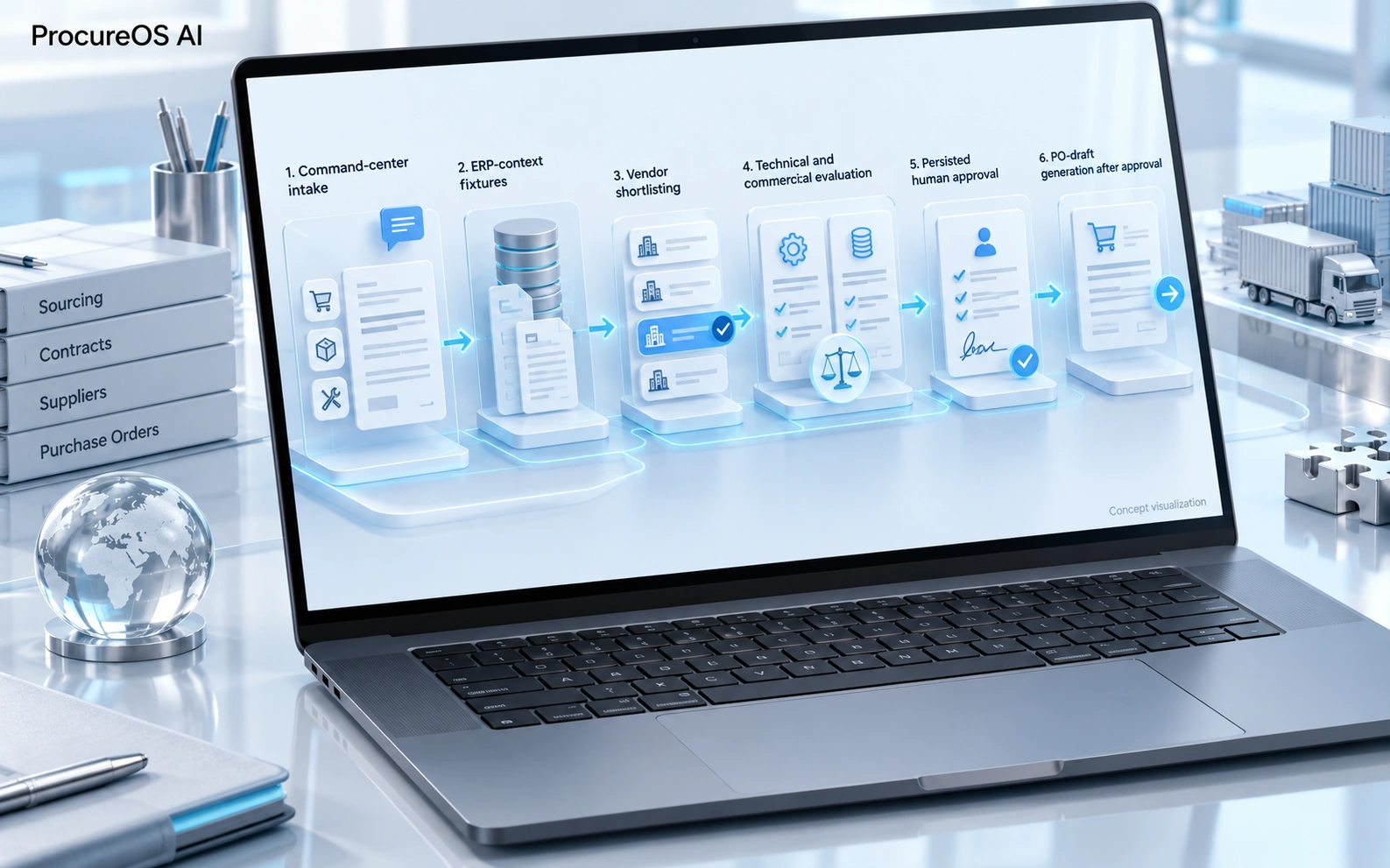
Prototype · AI concept visualization · project scope
A governed workflow adds purchasing context, compares suppliers and pauses for approval before creating a purchase-order draft.
Vendor comparison and purchase preparation need consistent evidence while preserving human approval authority.
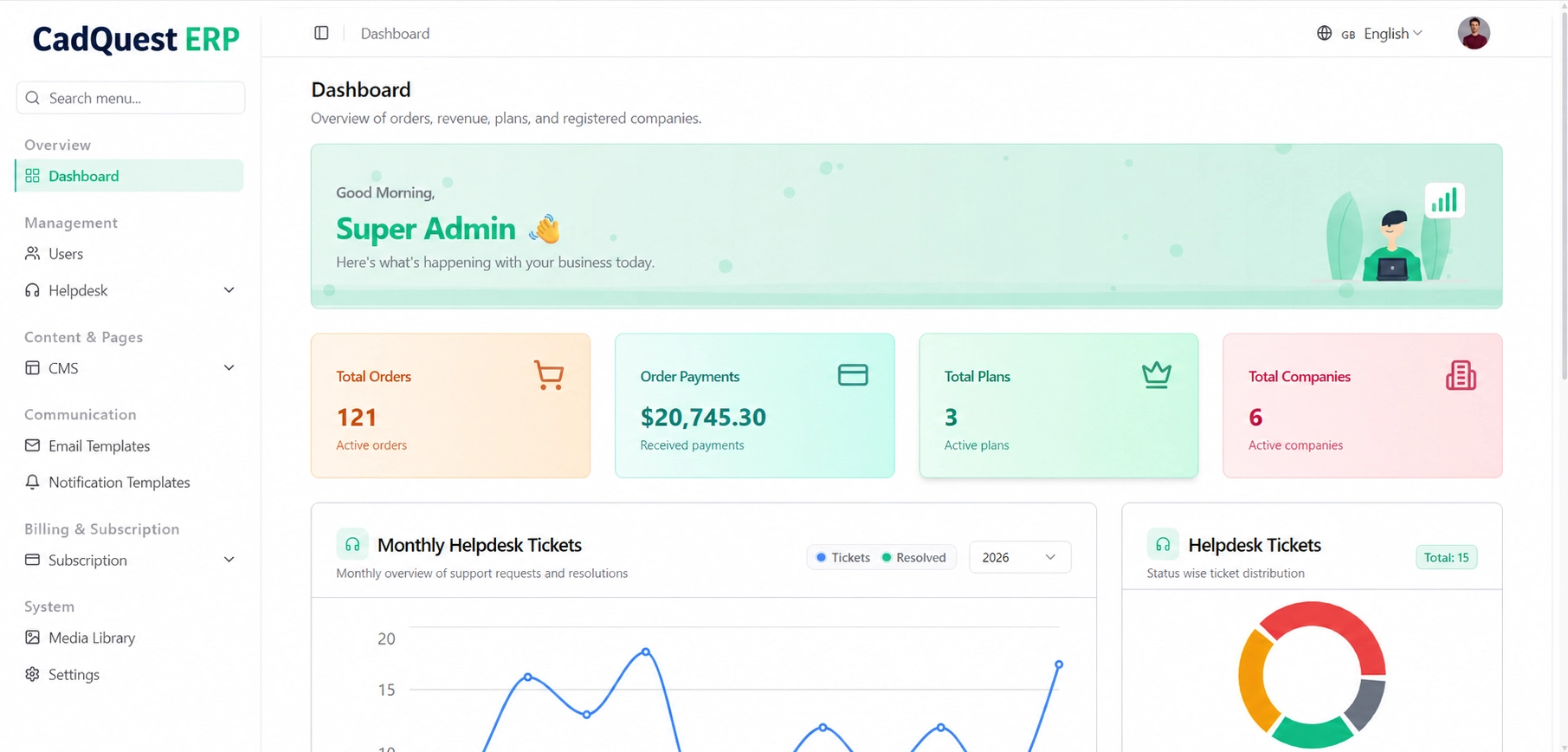
Application · CadQuest ERP · branding-edited preview
A Laravel ERP source tree groups commercial, accounting, employee and project modules around shared business records.
Finance, HR, sales and project records become fragmented when departments use separate spreadsheets and tools.
Project profiles describe their available scope and development stage. Interface captures, documentation and workflow concepts are labelled separately; they are not claims of measured business results.
Before we begin
Start with the current task, its owner and the systems involved. Representative defect examples, camera position, lighting conditions, quality rules help us assess scope. A finished technical brief is not required.
Scope is agreed after discovery. A useful starting point is inspection results with evidence, with the essential review path and an acceptance check. Uncertain-case review queue and Missed-defect and rejection evaluation can follow where the operating case supports them.
We assess read-only machine data, approved camera feeds, maintenance and production records for permitted access and usable interfaces. Integration feasibility, data quality and ownership are confirmed before implementation commitments.
Agree examples, failure cases and acceptance criteria before the build. Review source traceability, correction effort, access boundaries and the handover into everyday operations. We do not promise a fixed saving or performance figure before that assessment.