Purchase readiness
Capture the request, check required fields and bring stock context into the approval view. Missing supplier or budget information returns to a named owner.

Solution workflow
Coordinate arrivals, loading bays and internal movements with a shared view for yard teams.
Coordinate arrivals, loading bays and internal movements with a shared view for yard teams.
The work, in detail
Disconnected schedules make it difficult to see delayed arrivals, occupied bays and work waiting for dispatch.
Agree the operating rules first, then introduce automation in reviewable stages.
Use record expected arrivals and vehicle check-ins within the agreed scope of internal truck & yard management system (tms). Define the responsible owner, the relevant source records and the checks that make the output useful.
Use assign bays and record loading or unloading milestones within the agreed scope of internal truck & yard management system (tms). Define the responsible owner, the relevant source records and the checks that make the output useful.
Use surface delays and hand over exceptions to dispatch within the agreed scope of internal truck & yard management system (tms). Define the responsible owner, the relevant source records and the checks that make the output useful.
Site layout, bay capacity, dispatch rules and a practical way for staff to record movement events.
Compare representative examples with the current process. Review exceptions, correction effort, source traceability and handoff quality before expanding scope.
What takes shape
Final scope is agreed after discovery. These are the working outputs we can shape around your context.
Define the records, permissions and interfaces needed for arrival and bay schedule. Review a working example with the process owner before widening scope.
Connect movement status to a named reviewer and an action path. Include empty states, incomplete records and recovery behaviour in acceptance checks.
Document the production, review and maintenance of delay and dispatch exceptions. Keep the handover practical for the people supporting the system.
A connected delivery path
Establish the source records and the intended result. For Internal Truck & Yard Management System (TMS), confirm the input quality and permission boundaries before processing.
Connect the approved sources and apply the task-specific checks. Keep missing information and uncertain results visible for review.
Review representative outputs and exceptions with the accountable owner. Agree what may proceed and what requires correction or escalation.
Prepare for a useful conversation
Bring representative expected arrivals and bay capacity. Use synthetic or approved records when exploring the workflow; agree handling rules before live data is introduced.
Identify the business owner and the people who will use or review the output. For Internal Truck & Yard Management System (TMS), confirm who can approve changes and resolve exceptions.
Describe what works today, where it breaks down and how the proposed workflow will be reviewed. Compare quality and correction effort as well as speed.
Buying, receiving and reconciliation
A purchasing workflow is only as useful as its exception handling. Link requests, quotations, orders, receipts and invoices without hiding mismatches or removing approval ownership.
Capture the request, check required fields and bring stock context into the approval view. Missing supplier or budget information returns to a named owner.
Prepare comparisons and follow-up drafts using approved commercial rules. A buyer reviews commitments, substitutions and changes to terms.
Compare purchase orders, goods receipts and invoice lines. Show quantity, price and tax differences with the supporting record before finance decides what happens next.
Define success before delivery
Choose a representative sample, record the current baseline and agree who accepts the result. These are evaluation criteria to discuss, rather than promised outcomes.
Match quality on representative invoice lines
Age and ownership of unresolved exceptions
Duplicate records, correction effort and review time
Supplier commitments and payment release require explicit authorisation. Missing evidence must remain visible rather than being inferred into a completed transaction.
Inside Internal Truck & Yard Management System (TMS)
Approved source material
Integration scope to confirm
Outputs to agree in discovery
From the project library
Explore the product patterns and operating context relevant to internal truck & yard management system (tms). Each profile explains its own scope and stage; adjacent examples do not imply the same solution has already been delivered.

Prototype · AI concept visualization · project scope
A governed workflow adds purchasing context, compares suppliers and pauses for approval before creating a purchase-order draft.
Vendor comparison and purchase preparation need consistent evidence while preserving human approval authority.
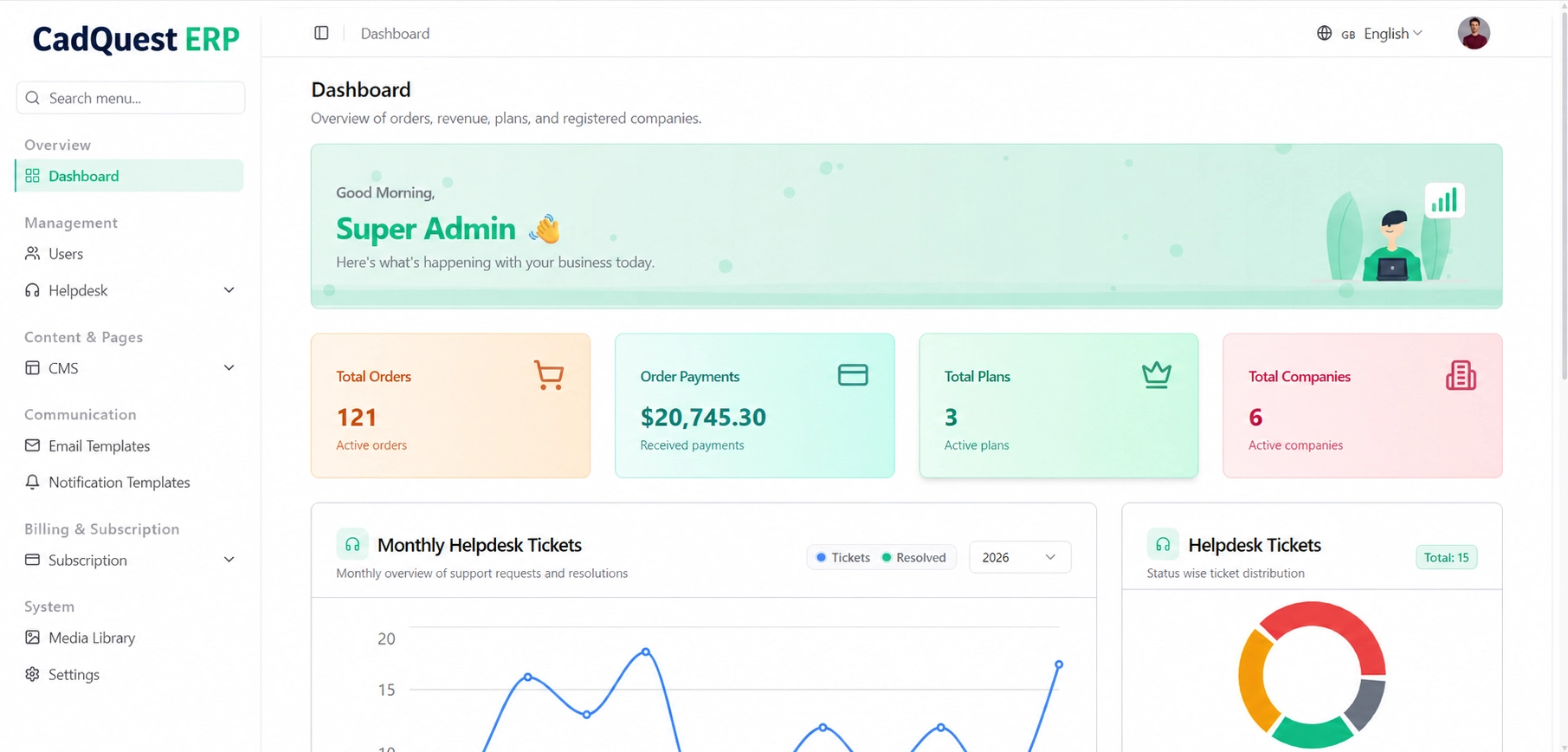
Application · CadQuest ERP · branding-edited preview
A Laravel ERP source tree groups commercial, accounting, employee and project modules around shared business records.
Finance, HR, sales and project records become fragmented when departments use separate spreadsheets and tools.
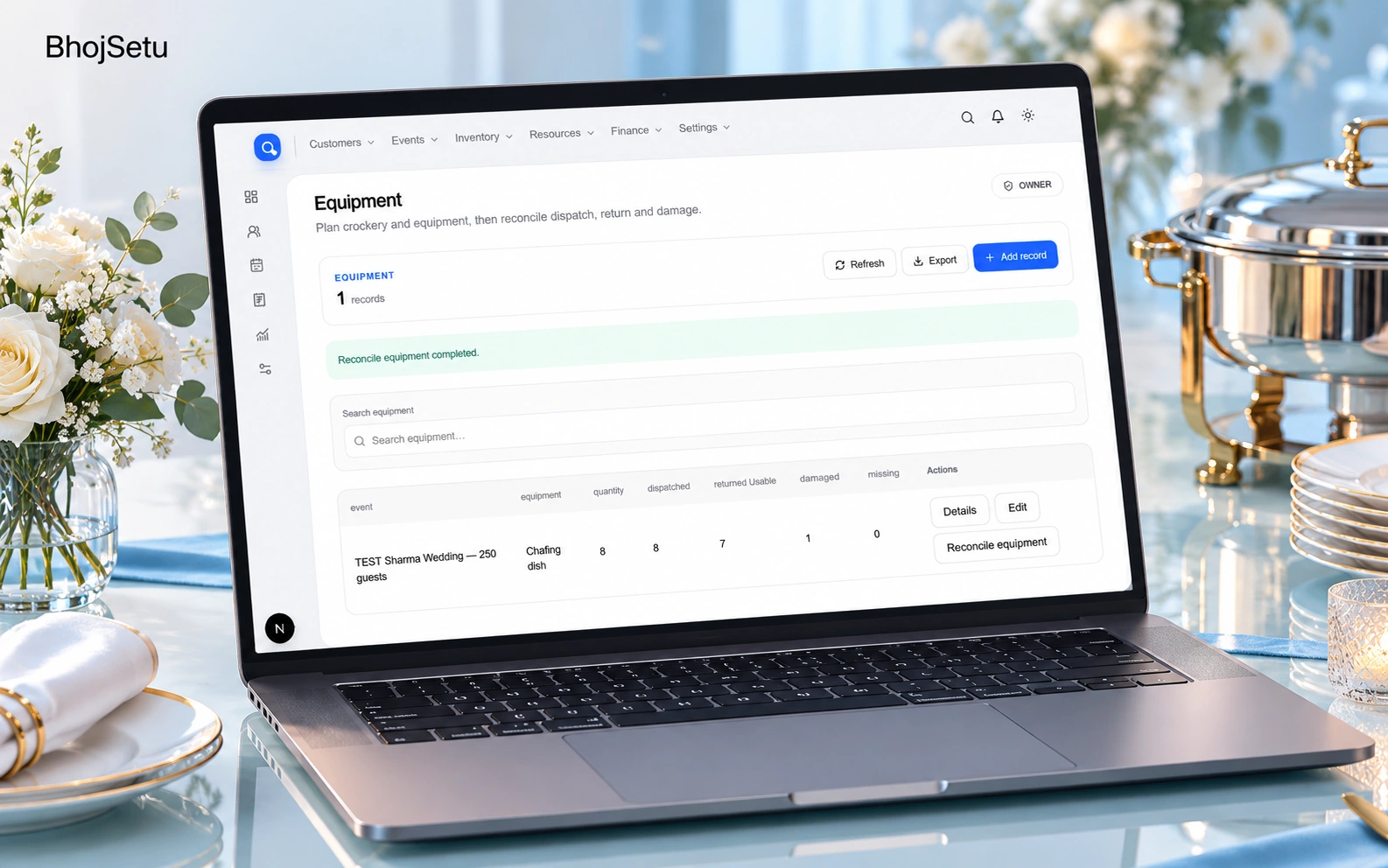
Pilot · AI presentation artwork · screen reference
A connected catering workspace brings bookings, menus, recipe scaling, procurement, workers, equipment and billing into one flow.
Catering teams repeat event, menu, quantity and payment data across disconnected operational steps.
Project profiles describe their available scope and development stage. Interface captures, documentation and workflow concepts are labelled separately; they are not claims of measured business results.
Before we begin
Start with the current task, its owner and the systems involved. Representative expected arrivals, bay capacity, check-in events, dispatch rules help us assess scope. A finished technical brief is not required.
Scope is agreed after discovery. A useful starting point is arrival and bay schedule, with the essential review path and an acceptance check. Movement status and Delay and dispatch exceptions can follow where the operating case supports them.
We assess read-only machine data, approved camera feeds, maintenance and production records for permitted access and usable interfaces. Integration feasibility, data quality and ownership are confirmed before implementation commitments.
Agree examples, failure cases and acceptance criteria before the build. Review source traceability, correction effort, access boundaries and the handover into everyday operations. We do not promise a fixed saving or performance figure before that assessment.