The problem
What needed
to change.
Real-time AI products need reusable session controls, transcripts and audio/video presentation.

Project story
A LiveKit-based frontend provides conversation controls and a configurable interface alongside agent starters and a token service.
A LiveKit-based frontend provides conversation controls and a configurable interface alongside agent starters and a token service.
About the project
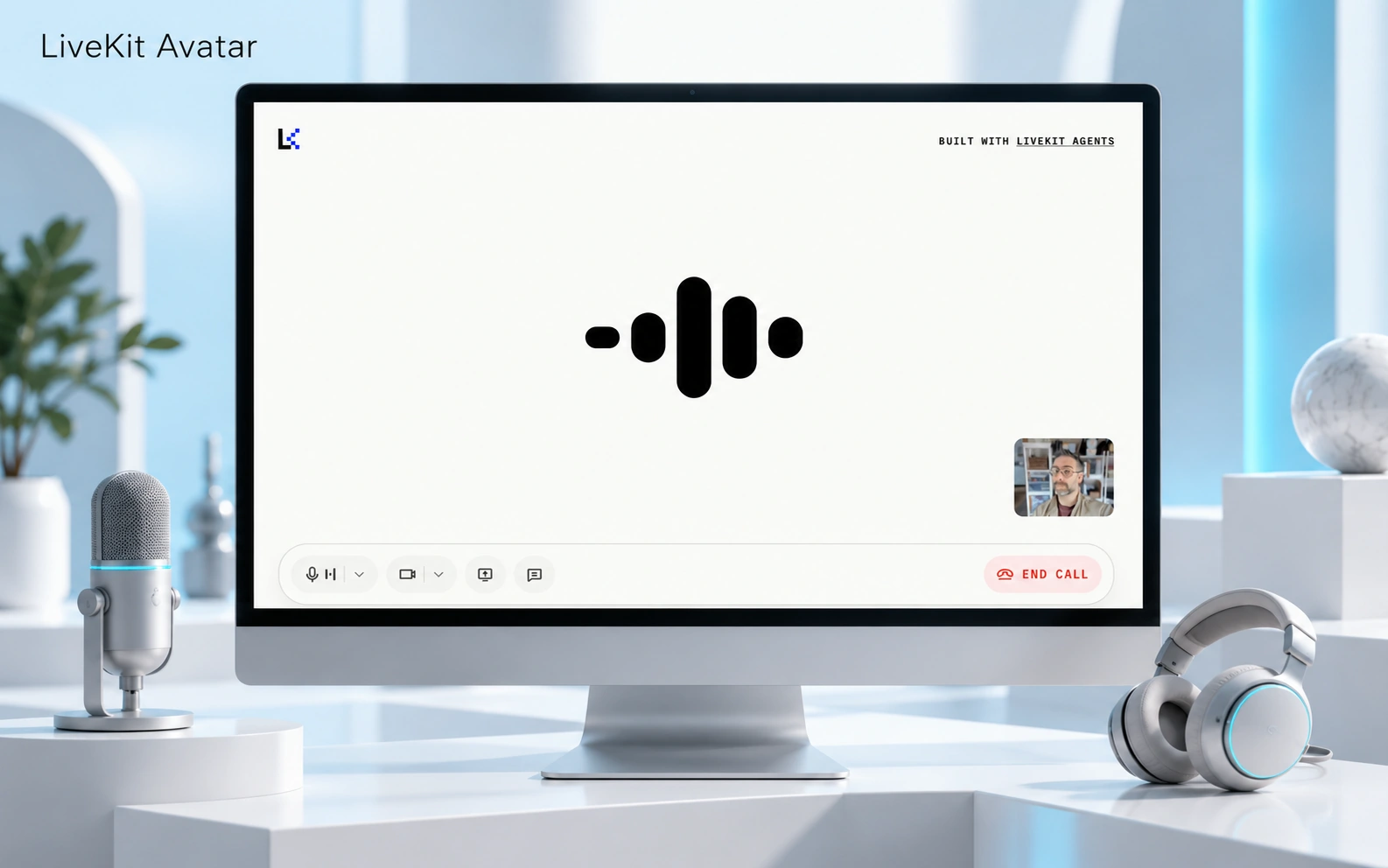
A React/Next.js voice and avatar interface built around LiveKit Agents UI. It provides a reusable conversational-session frontend, with associated Node and Python agent starters, a token server, and a VoltAgent checkout.
Developers and product teams prototyping spoken AI assistants, virtual presenters, or multimodal assistants.
The problem
Real-time AI products need reusable session controls, transcripts and audio/video presentation.
The solution
A LiveKit-based frontend provides conversation controls and a configurable interface alongside agent starters and a token service.
What we do
The capabilities and workflows that bring this project together.
Why we do it
Accelerate building a real-time assistant experience by reusing session controls, transcripts, audio visualization, and avatar integration instead of implementing WebRTC interaction from scratch.
Inside the workflow
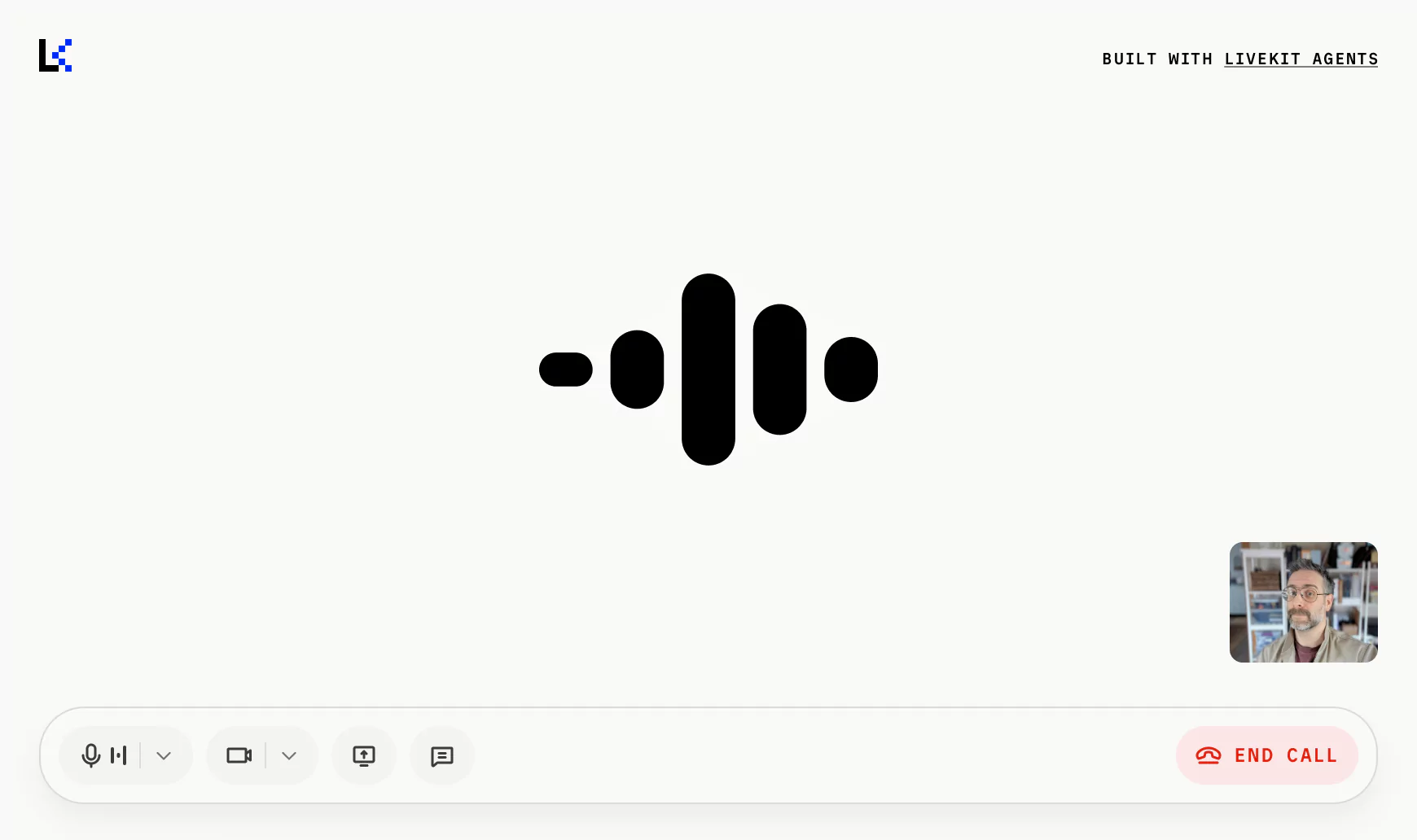
Users start a session, speak to an agent, and view transcripts or an avatar. The starter documentation also describes camera streaming, screen sharing, audio visualizers, and configurable branding.
A closer look
Interface captures and design references are labelled below. Presentation artwork adds framing and atmosphere.
Technology
Next.js, React, LiveKit JavaScript SDK, Agents UI/shadcn components, Node/Python agent starters, and a Node token service.
Project scope
A starter-based multi-component workspace. The README establishes available interface capabilities, but not a unique business vertical or a verified live avatar provider.